Iconography
III / V
Four glyphs. One archive.
The Aphelios Group identity is organised around four glyphs. Each is drawn from the same source: the plaques affixed to the Pioneer 10 and Pioneer 11 spacecraft in 1972 and 1973, and the covers of the Voyager Golden Records sent in 1977. Those artefacts were the first attempts by any institution to describe the origin of a human object to a reader yet unknown.
We keep the same archive. Four glyphs. Each represents a movement in the institution's grammar.
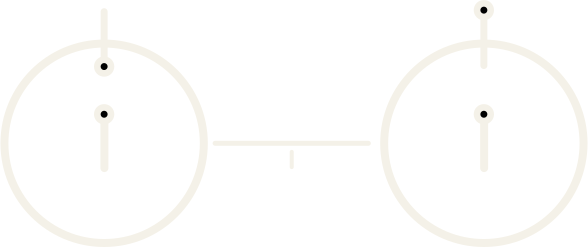
A shared constant.
The hyperfine transition of neutral hydrogen is the universe's most common physical event. Its wavelength and frequency are the units in which the Pioneer plaque encodes everything else. Before coordinate, before orbit, before figure, there is a shared constant. For Aphelios, that constant is patience written in decades.
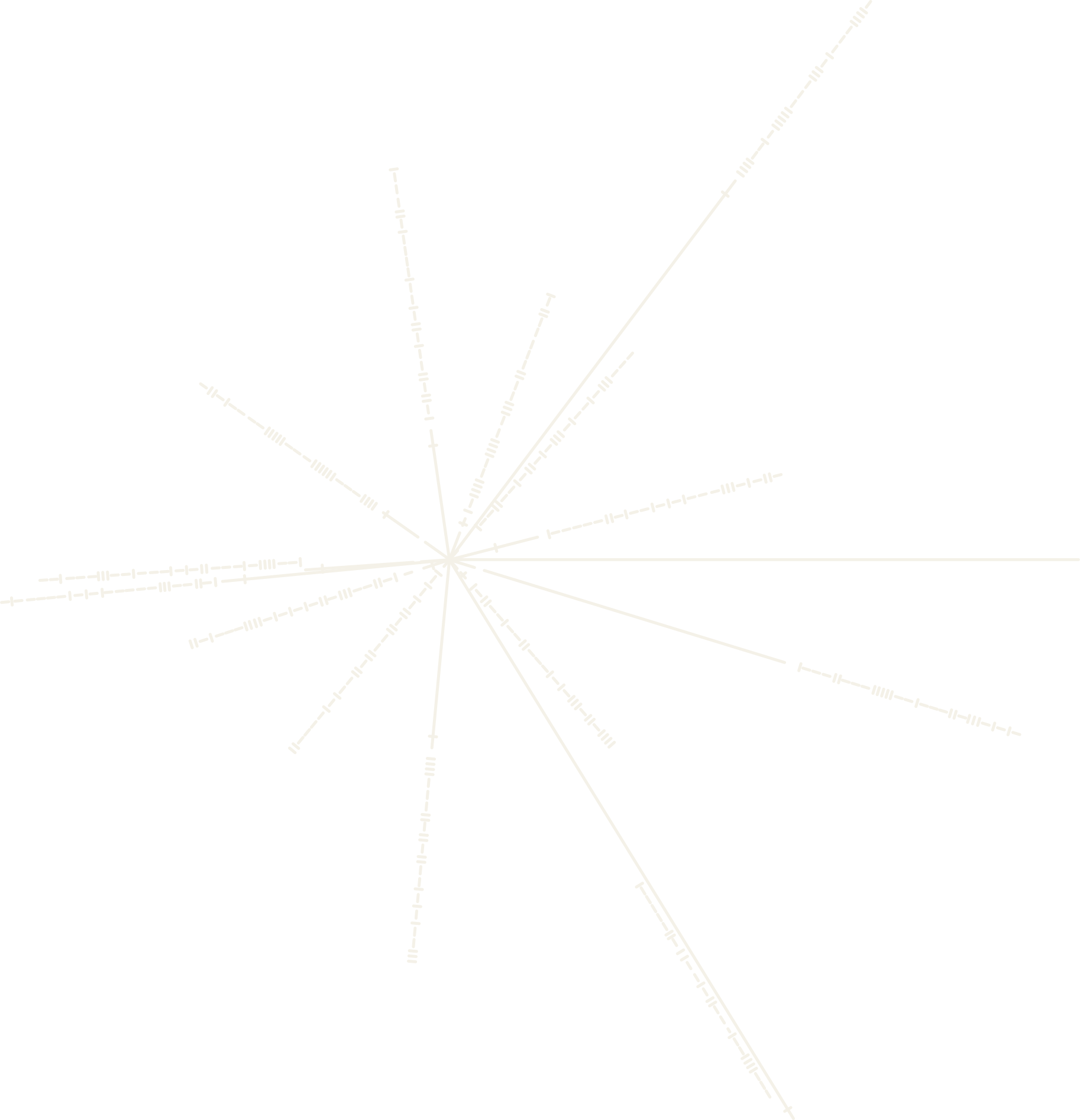
A direction chosen at the least light.
Fourteen radial lines encode the position of the sun relative to fourteen pulsars. Each line carries its pulsar's rotation period in binary. A single longer line extends to the galactic centre. The map is a coordinate written for strangers, in a language they have not yet learned. It is the primary mark of Aphelios Group because it remains true regardless of time, audience, or address.

The return is slow.
A system of nine bodies, one sun, and a trajectory that departs. For Aphelios, the orbit describes the relationship between the institution and the companies it builds and backs. The orbit is long. The return is slow. The aphelion is the discipline. Capital at the aphelion is not escape capital. It is the most disciplined point of a long orbit.
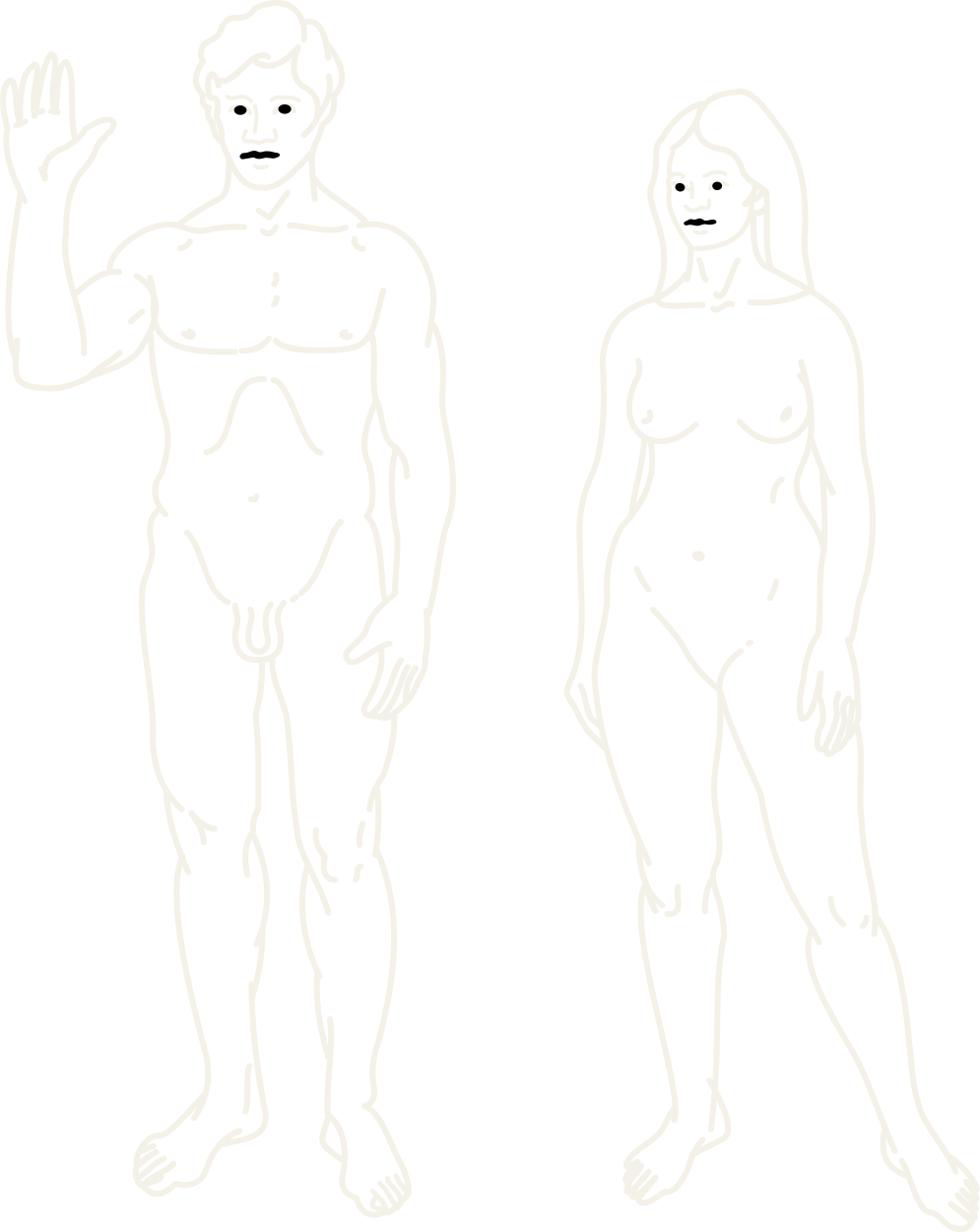
A record of capability.
Two silhouettes. Not ornament, not demographic. A record that something capable of building sent the object outward. Aphelios backs those who can still recognise a primitive when they see one. The figures are the only glyph that addresses whom the institution is for.
On use
The symbol and the wordmark are never tightened into a single lockup. They occupy separate zones: the symbol dominates the canvas; the wordmark sits as a quiet signature. Each glyph is used once per surface, never together.
The coordinate is primary. The atom, the orbit, and the figures are subordinate, used only in long-form surfaces where the institution is being explained.